Buying through our links supports The Wrist Journal at no extra cost to you. Learn more.
There are watches I buy because I love the design, watches I buy because the specifications look impressive, and then there are watches that somehow manage to get practically everything right. My Orient Mako 40 belongs firmly in the third category.
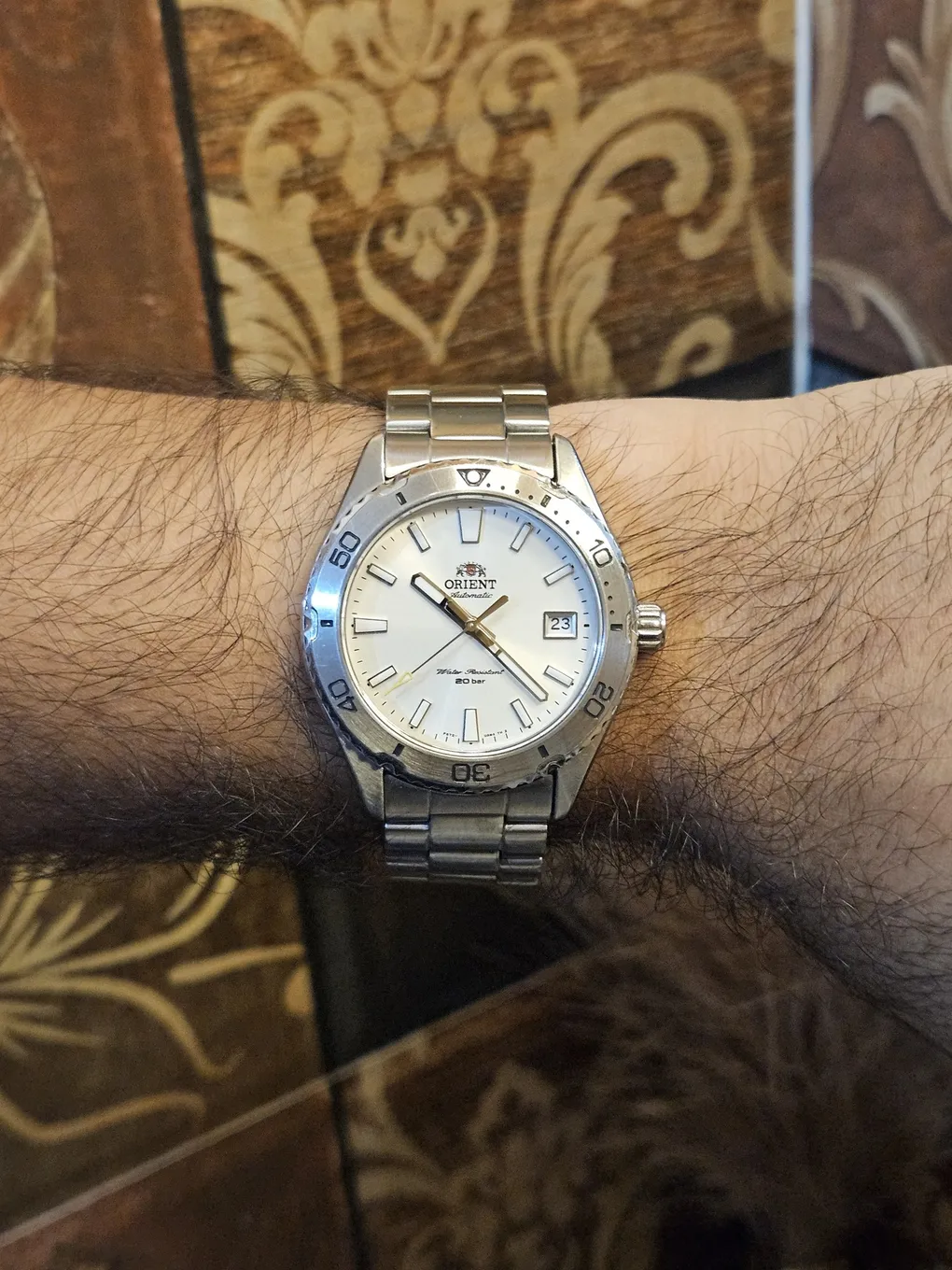
I bought the white-dial RA-AC0Q03S in 2024 for approximately ₹23,000, and it has turned out to be one of the best watch purchases I’ve ever made. A beautiful white dial, stainless steel construction, sapphire crystal, an automatic movement, 200 metres of water resistance and a bracelet that feels genuinely well made. On paper, that’s already a compelling package. In person, it’s even better.
But what really sold me on this watch wasn’t the specifications. It was how effortlessly it fitted into my life. I’ve worn it with just about everything, subjected it to the sort of everyday use a proper sports watch should be able to handle, and received more compliments and questions about it than I ever expected. It’s become my favourite beater watch, which is rather impressive considering how good it looks.
And here’s the thing. Even though I paid ₹23,000, I honestly wouldn’t mind paying ₹35,000 for it. That’s how highly I rate this watch.
White and Silver Done Right
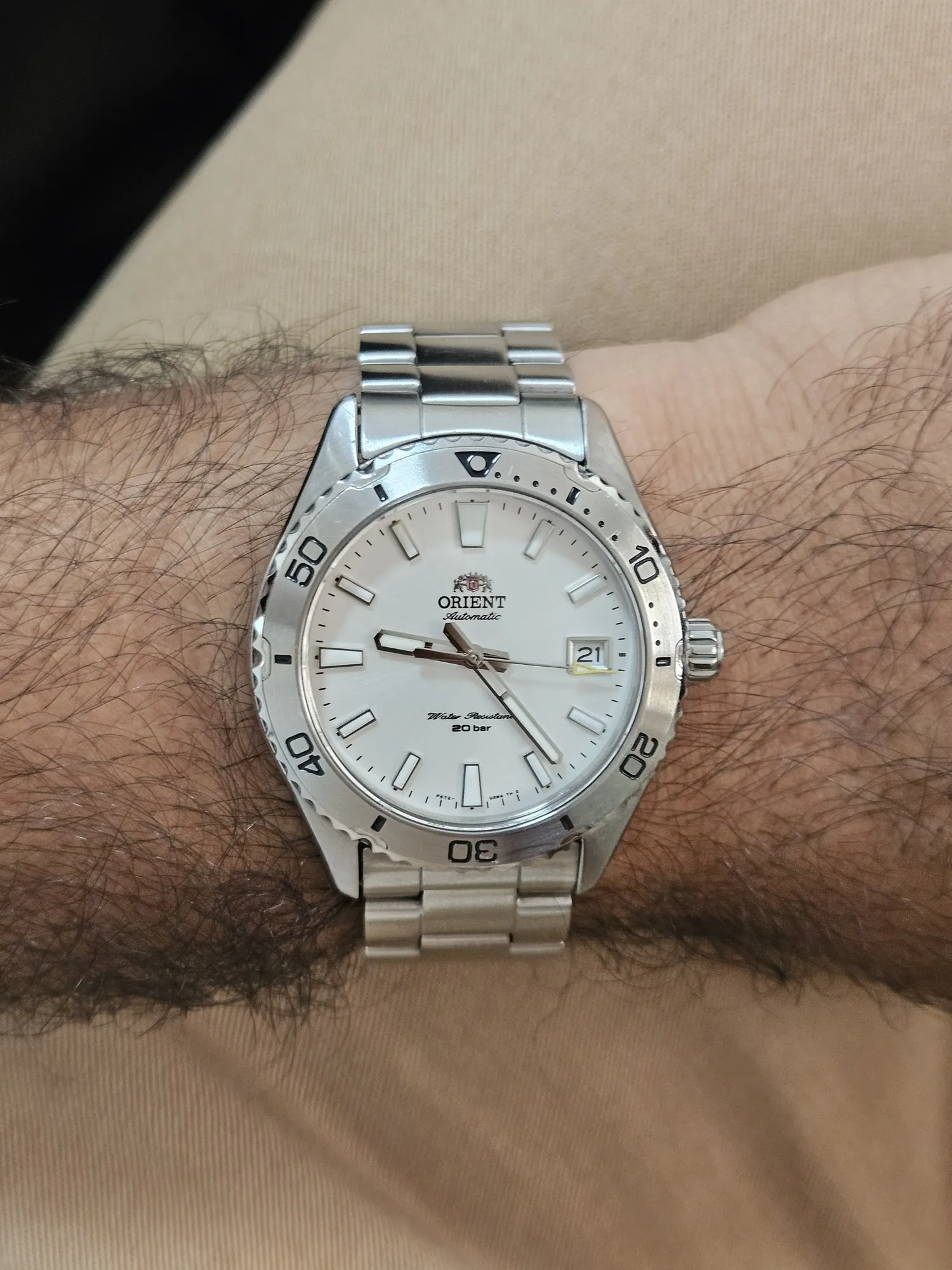
The first thing that attracted me to this particular Mako 40 was the colour combination. White dial, silver case, silver bracelet and a matching stainless steel bezel. It’s incredibly clean, and there’s something about how understated the whole design is that makes it look far more sophisticated than a typical sports watch.
White dials can sometimes be a little boring. Without enough contrast or interesting details, they can end up looking like somebody forgot to finish designing the watch. Thankfully, the Mako 40 doesn’t have that problem. The applied hour markers, metallic hands and date window keep things interesting without making the dial feel busy. There’s hardly any colour here beyond the little red detail in Orient’s logo and the yellow accent on the seconds hand, but I absolutely love those tiny touches. They’re just enough to give the dial personality without disturbing the clean white-and-silver aesthetic.
What I particularly love is how versatile it is. The white and silver combination works with practically everything I wear. It looks equally good with a casual T-shirt, an office outfit or something a little more formal. Most dive-style watches have an obviously sporty appearance, but the Mako 40 manages to look elegant without losing that character entirely. The stainless steel bezel, rather than a contrasting coloured insert, makes a big difference here.
And people notice it. I’ve genuinely had so many people ask me about this watch, which is funny because it isn’t particularly flashy. There are no wild colours or complicated details demanding attention. It just looks incredibly good.
Some people might find this particular version a little too plain, and I can understand that. If you prefer bold colours or watches that immediately grab attention, the white Mako might not be your first choice. Personally, though, that simplicity is exactly what makes it so appealing. It feels subtle, versatile and sophisticated without looking like it’s trying too hard.
The Beater Watch That Actually Takes a Beating
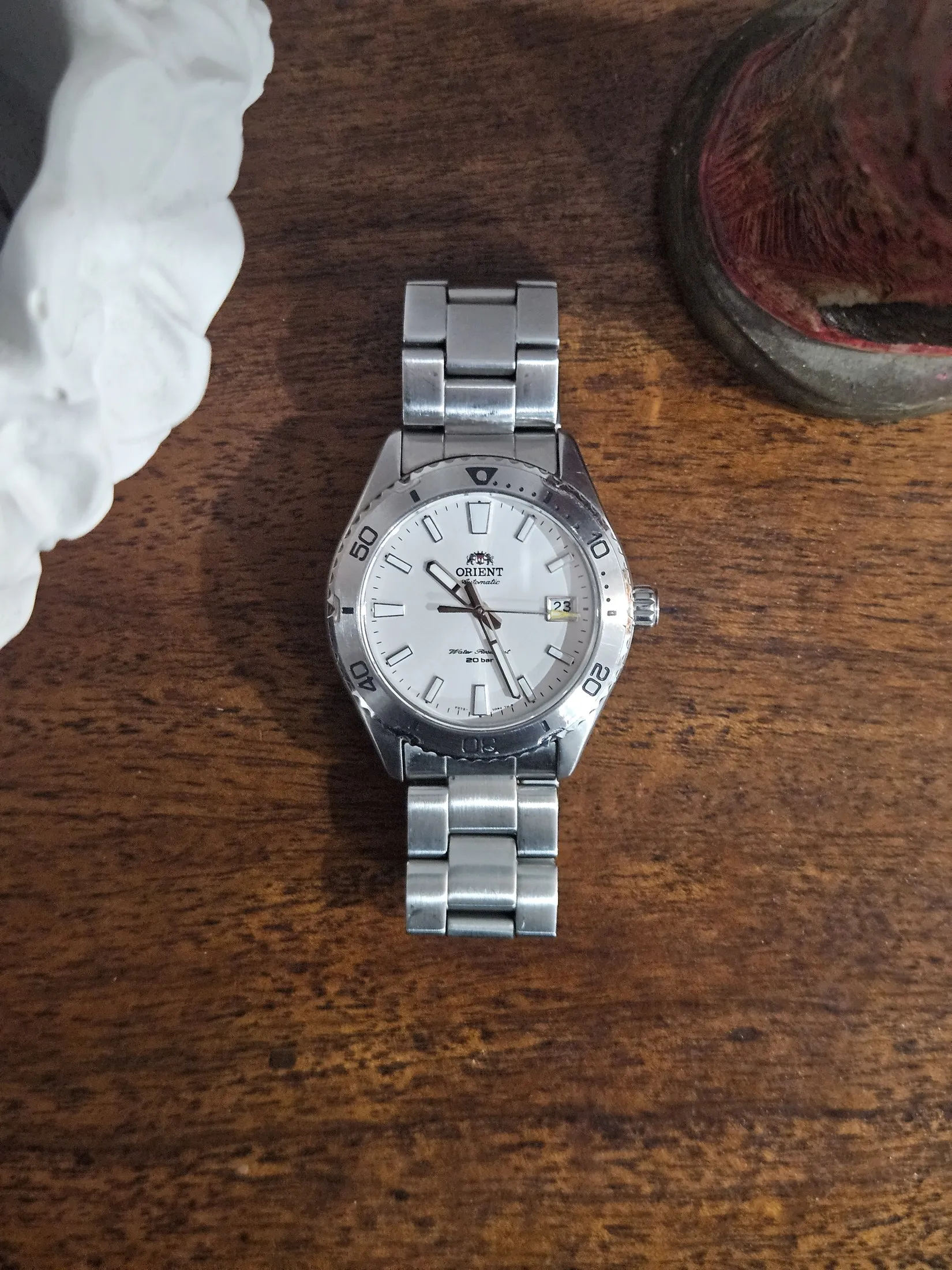
One of my favourite things about the Mako 40 is that I don’t feel the need to baby it.
I’m not especially precious about my watches. I wear them, use them and expect them to survive real life. The Mako has been my favourite watch for that sort of everyday use, and it has handled it remarkably well.
It’s a reassuringly solid watch. The stainless steel construction feels substantial, the sapphire crystal offers excellent scratch resistance, and the 200-metre water-resistance rating means it has the specifications of a properly capable sports watch. Orient also gives it a screw-down crown and a rotating bezel, so it has the functionality you’d expect from a dive-style watch.
Now, I’m not claiming to have conducted some elaborate torture test. I haven’t taken it scuba diving or tried to deliberately abuse it for content. My experience is simply that I’ve treated it like a watch meant to be used, and it has taken that treatment in its stride.
That matters even more to me after my experience with the Seiko SRPL57K1. Despite being worn fewer than ten times, the Seiko managed to pick up a deep scratch on its Hardlex crystal while sitting in a drawer with other things. I can’t say exactly what caused that scratch, but it’s made me appreciate the Mako’s sapphire crystal considerably more.
And that’s why this watch has become such a favourite. It doesn’t demand special treatment to justify its existence. It’s attractive enough to wear when I want to look presentable and robust enough that I don’t spend the entire day worrying about it.
The Size, the Flat Crystal and That Bracelet
The Mako 40 measures 39.9mm across, with a lug-to-lug distance of 46.5mm. Those are lovely dimensions for a watch like this, particularly when so many dive-style watches seem determined to occupy as much wrist space as physically possible.
One thing I particularly enjoy is the relatively flat appearance of the watch. The sapphire crystal itself is flat, and the clean dial and steel bezel contribute to a nicely restrained profile. It doesn’t have the exaggerated chunky appearance I associate with some larger divers.
Interestingly, the Mako isn’t especially thin on paper. Orient lists the case thickness at 12.8mm, which is fairly substantial for a 40mm watch. But there’s a difference between measured thickness and how bulky a watch looks or feels. The proportions work beautifully for me, and I love the way the entire watch comes together on the wrist.
Then there’s the bracelet, which is one of my favourite parts of the watch.
It’s genuinely very good. The stainless steel feels substantial, there’s a reassuring heft to the whole thing, and the bracelet complements the case beautifully. It doesn’t feel like something Orient included just to complete the package. It feels like a proper part of the watch.
I’ve worn watches that cost considerably more without enjoying their bracelets nearly as much. My Seiko SRPL57K1 is a good example. I love that watch’s design, but its bracelet is just okay. On the Orient, the bracelet actively adds to how much I enjoy wearing it.
That extra weight is worth mentioning too. The Mako 40 isn’t trying to disappear on your wrist like a titanium watch. It has a noticeable, satisfying heft that makes it feel substantial. I personally enjoy that sensation, although someone who prefers extremely lightweight watches might feel differently.
The Specifications
| Specification | Orient Mako 40 RA-AC0Q03S |
|---|---|
| Case diameter | 39.9mm |
| Lug-to-lug | 46.5mm |
| Case thickness | 12.8mm |
| Case material | Stainless steel |
| Bracelet | Stainless steel |
| Movement | Orient F6722 automatic |
| Power reserve | Approximately 40 hours |
| Crystal | Flat sapphire |
| Water resistance | 200 metres / 20 bar |
| Crown | Screw-down |
| Bezel | Unidirectional rotating bezel |
| Functions | Hours, minutes, seconds, date |
| Lug width | 20mm |
| Price paid | Approximately ₹23,000 in 2024 |
Inside the watch is Orient’s F6722 automatic movement. It supports hand-winding and hacking, meaning you can wind the watch manually and stop the seconds hand when setting the time. The approximately 40-hour power reserve is perfectly adequate for regular use, although you’ll probably need to reset it if you leave it unworn for a couple of days.
Orient quotes a daily accuracy range of +25 to -15 seconds. That’s the manufacturer specification, not a measurement I’ve independently timed over weeks of wear. It’s a fairly conventional figure for an affordable mechanical movement, and I wouldn’t buy the Mako expecting quartz-like precision.
There is nothing especially exotic about the movement, but I don’t think there needs to be. This is an automatic sports watch built around everyday practicality, and the movement is a sensible fit for that role.
The sapphire crystal and 200 metres of water resistance are particularly welcome, especially considering what I paid. The Mako has the equipment of a serious water-resistant sports watch, although that doesn’t substitute for checking the manufacturer’s guidance before using it for diving.
The Little Things I’d Change
I genuinely struggle to find much to complain about with this watch, which is unusual for me. There are normally at least a couple of things that start annoying me after the initial excitement wears off. With the Mako 40, those complaints are surprisingly difficult to find.
The first would be the lume. It’s okay, and it does the job, but I think Orient could have done a little better here. On a watch with this much sporting capability, stronger lume would have been a welcome addition. It’s not something that bothers me enormously in everyday use, but if I had to identify an area for improvement, that would be one.
The other is the calendar. The Mako 40 has a date window at three o’clock, whereas the Kamasu gives you both day and date. I quite like having the day displayed on an automatic watch, so it would have been a nice addition.
That said, the date-only window suits the Mako 40’s clean dial design, and I can understand why someone might actually prefer it this way. The additional day display would add functionality, but it would also change a design that I already think looks excellent.
And that’s pretty much the extent of my complaints. The lume could be better, and a day display would be useful. Neither comes close to changing how much I enjoy the watch.
What About the Other Mako and Kamasu Models?
The white RA-AC0Q03S is the Mako I own and the one I’m reviewing here. Orient makes other versions in different dial colours, and the wider Mako and Kamasu families offer additional designs and sizes.
I’ve also had the opportunity to try several Mako and Kamasu models at a store, and I was pleasantly surprised by how consistent the quality felt across them. The case finishing, bracelets and overall construction were all very much in line with what I’ve come to love about my Mako 40. Of course, trying a watch in a store isn’t the same as owning it for years, but nothing I handled made me feel that my Mako was some unusually good exception.
The Kamasu is particularly worth considering if you prefer a more traditional-looking dive watch. Common Kamasu variants have a larger case, a day-date display and the same broad value-first attitude that makes Orient so appealing.
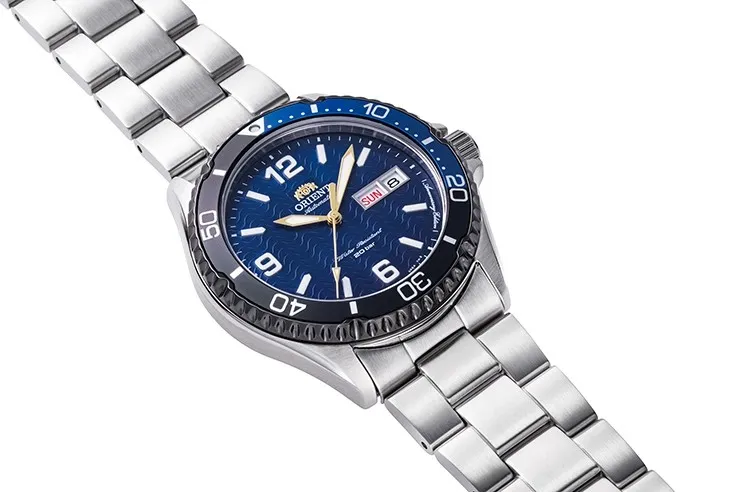
Personally, I love how restrained the Mako 40 looks. The smaller case and cleaner dial make it more versatile for my wardrobe, and I wouldn’t necessarily trade that simplicity for a busier design. But I can absolutely understand why someone would prefer the more traditional appearance of a Kamasu.
My experience with the Mako 40 has made me a huge fan of Orient as a brand, and I’d happily recommend exploring the rest of its Mako and Kamasu collections.
And we haven’t even talked about the Bambino yet.
It’s one of the most highly regarded affordable automatic dress-watch collections, and for good reason. The vintage-inspired designs, elegant proportions and old-school charm make these watches incredibly appealing. If you’re considering a Seiko Presage, I genuinely think the Bambino deserves a look too. The Presage collection has some fantastic dials, but the Bambino is such a lovely, credible alternative for someone who wants a stylish automatic dress watch without getting carried away.
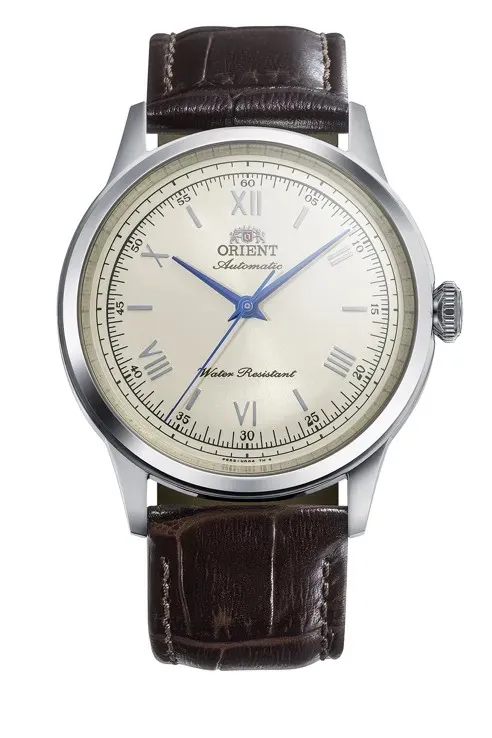
I haven’t spent extended time wearing a Bambino, so I won’t pretend this is a hands-on comparison. But between my experience with the Mako 40, trying the other sports models and the reputation the Bambino has earned among enthusiasts, Orient is a brand I would strongly encourage Indian buyers to explore. Just keep an eye on the pricing, because even a fantastic watch can become a questionable deal if the Indian markup gets too ambitious.
Orient Is Finally Easier to Find in India, but What About the Prices?
This is where the review becomes a little more complicated for Indian buyers.
Orient has recently become easier to find through Indian retailers, which is encouraging. For enthusiasts who previously had to rely on imports or less familiar sellers, having local availability is a welcome development.
The catch, unsurprisingly, is pricing.
I paid approximately ₹23,000 for my Mako 40 back in 2024, and at that price, I honestly think it was one of the best-value automatic watches I could have purchased. You’re getting a very attractive, well-built stainless steel watch with sapphire crystal, 200 metres of water resistance, an automatic movement and an excellent bracelet. I struggle to think of much I would change.
But what if it cost ₹35,000?
I’d still buy it. That’s how much I like this watch.
At ₹35,000, the value argument becomes slightly less ridiculous, but I still think the design, construction and everyday experience justify the money. This is one of those rare watches where I don’t feel that my enthusiasm depends entirely on having managed to get a fantastic deal.
However, that doesn’t mean I’d recommend paying absolutely any amount for it. If the Mako 40 is priced significantly above ₹35,000 locally, I’d become much more selective. There’s a difference between a great watch and a great purchase, and Indian pricing can change that equation quite dramatically.
I’d also recommend checking the warranty and service arrangements with the specific retailer before buying. Indian availability is a welcome development, but buyers deserve clarity about who will actually handle an issue with their watch.
Would I Choose This Over a Seiko?
At the same price, I would very seriously lean towards Orient.
That’s not because Seiko makes bad watches. Far from it. I own and enjoy my Seiko SRPL57K1, and I think Seiko is capable of producing some absolutely beautiful designs. But I’ve also become increasingly frustrated with the compromises some Seiko models make at their Indian asking prices.
The Mako 40 is a perfect illustration of why. It gives me a sapphire crystal, 200 metres of water resistance, excellent proportions, a bracelet I genuinely enjoy and a design that works with almost everything. These aren’t just specifications I appreciate while reading a product page. They’re things that contribute to how much I enjoy owning the watch.
Compare that with the SRPL57K1, which has a ₹40,000 MRP, Hardlex crystal and a bracelet I find considerably less impressive. I still love the Seiko’s dial, and the two watches have very different personalities. But if someone asked me which offered the better overall ownership experience for my money, I wouldn’t hesitate to pick the Orient.
That doesn’t mean Orient automatically beats every Seiko in every price category. Individual models still deserve to be judged on their own merits. But my Mako 40 has set a very high bar for what I expect from an affordable Japanese automatic.
The Verdict
I absolutely love the Orient Mako 40. It’s one of those watches that reminds me how satisfying a really well-executed, relatively affordable watch can be.
The white and silver design is beautiful, the proportions are excellent, the bracelet feels fantastic, and the sapphire crystal and 200-metre water resistance make it a wonderfully practical everyday companion. It has a reassuring heft, works with practically every outfit I own and has become my favourite watch to wear without worrying too much about it.
More importantly, it has continued to impress me well beyond the excitement of buying it. I bought it in 2024 for ₹23,000, and I honestly think I would have been satisfied even at ₹35,000. That’s not something I can say about every watch in my collection.
The lume could be stronger, and I wouldn’t have minded a day display, but those are minor complaints in an otherwise excellent package. Some people might find the white dial a little plain, but to me, it’s the perfect combination of understated design and everyday versatility.
Would I recommend the Orient Mako 40? Absolutely, at a sensible price. It’s one of my favourite watches, one of the best purchases I’ve made, and a model I’d happily recommend to someone looking for a capable, versatile automatic.
I’d encourage anyone considering a Japanese automatic to give Orient a proper look, particularly the Mako, Kamasu and Bambino families. Just make sure the Indian price makes sense before buying.
At ₹23,000, my Mako 40 was an absolute steal. At ₹35,000, I’d still be delighted with it.
An 11/10 watch in my book. And considering how much I enjoy complaining about the little things manufacturers get wrong, that’s saying something.